
In the fields of engineering transport and rural logistics, small rear-dump trailers are fast becoming the tool of choice for an increasing number of professionals, thanks to their unique structural design and agile operational capabilities. Unlike their bulky, full-sized dump truck counterparts, these trailers navigate narrow spaces and complex terrain with remarkable ease. Today, let's explore the specific scenarios where small rear-dump trailers excel—and uncover exactly why they shine so brightly in these applications.
I. What is a Small Rear-Dump Trailer?
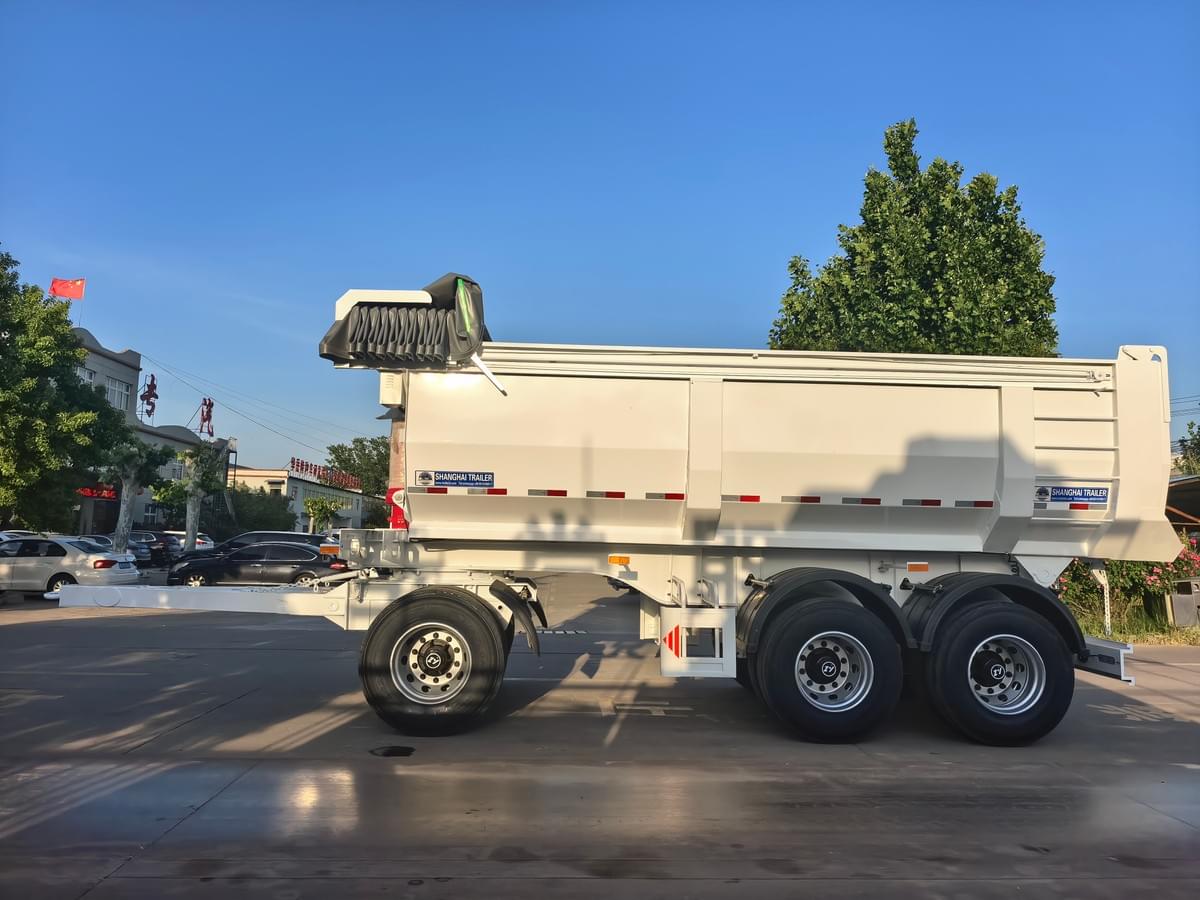
As the name suggests, a small rear-dump trailer is a light-to-medium-duty trailer featuring a cargo bed designed for **rearward dumping**. Typically towed by a prime mover—such as an agricultural tractor or a light-duty truck—it utilizes a hydraulic lifting mechanism to tilt the cargo bed backward, thereby enabling the automatic unloading of goods.
Compared to side-dump trailers, the rear-dump design offers a **larger dumping angle and ensures more thorough unloading**, making it particularly well-suited for discharging granular or lumpy materials. Furthermore, small rear-dump trailers feature relatively compact dimensions and a tight turning radius, allowing them to effortlessly maneuver through narrow streets, rural lanes, and within the confines of construction sites.
II. Five Key Application Scenarios
1. Rural Construction and Farmland Improvement
Against the backdrop of comprehensive rural revitalization initiatives, projects involving rural road paving, agricultural water conservancy, and residential land redevelopment are becoming increasingly common. In this context, the small rear-dump trailer proves to be an invaluable "right-hand man":
- Transporting Sand, Gravel, Cement, and Bricks: Providing essential building material transport for rural housing construction and road repairs.
- Distributing Organic Fertilizer: Delivering farmyard manure and organic fertilizers directly to the fields.
- Transporting Crop Residues and Harvests: Moving grain, straw, and other agricultural products during the harvest season.
Given that rural roads are often too narrow for large vehicles to traverse, the small rear-dump trailer effectively fills this critical gap.
2. Small-Scale Construction Sites and Renovation Projects
Urban projects—such as the renovation of older residential complexes, small-scale commercial interior work, and private villa construction—often face the challenge of limited site space and restricted access for large-scale vehicles. The advantages of small rear-dump trailers are clearly demonstrated here:
- Construction Waste Removal: Timely removal of debris and excavated soil generated during renovation projects.
- Construction Material Delivery: Transporting bulk materials such as sand, gravel, and cement to the site.
- Earthworks Support: Working in tandem with excavators and loaders to create an integrated "load-haul-dump" workflow.
3. Municipal Maintenance and Landscaping
Small rear-dump trailers are equally indispensable in the daily maintenance operations of municipal departments:
- Road Repair Material Transport: Precise delivery of repair materials such as asphalt and crushed stone.
- Landscaping Maintenance: Transporting topsoil, fertilizers, and pruned branches or weeds.
- Winter Snow Removal: Hauling de-icing agents, sand, gravel, and other anti-skid materials.
4. Short-Haul Transport in Mines and Quarries
In small to medium-sized mines, quarries, and aggregate plants, small rear-dump trailers fulfill the critical role of **on-site short-haul transport**:
- Ore and Aggregate Stockpile Transfer: Moving extracted materials from the active work face to stockpiles or loading points.
- Integration with Crushing Equipment: Serving as a connecting link within production lines involving crushers and screening machines.
- High-Frequency, Small-Batch Transport: Compared to large-scale mining dump trucks, they are better suited for material distribution between dispersed work sites.
5. Livestock and Poultry Farming
In modern livestock farms and agricultural operations, small rear-dump trailers also find their niche:
- Feed Transport: Delivering bulk feed from storage warehouses to various livestock barns and enclosures.
- Manure Removal and Field Application: Regularly clearing livestock and poultry manure, transporting it to composting sites or returning it to the fields as fertilizer.
- Bedding Replacement: Transporting bedding materials—such as sawdust or rice husks—and hauling away used bedding.
III. Core Advantages of Small Rear-Dump Trailers
Agility and Maneuverability: Compact body design, ideal for navigating narrow roads and complex sites. **Efficient Unloading:** Features a hydraulic rear-tipping design, ensuring rapid discharge with minimal residue.
Economical: Both the initial purchase price and ongoing operating costs are lower than those of large-scale dump trucks.
High Adaptability: Compatible with a wide range of towing vehicles (tractors, light trucks, etc.).
Easy Maintenance: Features a relatively simple structure, making routine maintenance and repairs convenient.
IV. Purchasing and Usage Recommendations
If you are considering acquiring a small rear-tipping trailer, the following points are worth noting:
1. Select Capacity Based on Load Requirements: Common specifications include 3-ton, 5-ton, and 8-ton models; avoid blindly pursuing a higher load capacity than necessary.
2. Prioritize Hydraulic System Quality: The hydraulic lifting mechanism is a core component; it is recommended to choose a system from a reputable brand.
3. Ensure Robust Body Materials: Look for a trailer body featuring longitudinal beams welded from high-quality manganese steel, offering superior load-bearing capacity and resistance to deformation.
4. Verify Regulatory Compliance: Ensure that the trailer's dimensions, axle loads, and other specifications meet relevant national standards.
5. Perform Regular Hydraulic System Maintenance: Change the hydraulic fluid on schedule and periodically inspect the hydraulic hoses and cylinder seals for leaks.
Conclusion
While a small rear-tipping trailer may not possess the imposing presence of a heavy-duty mining dump truck, the flexibility and practicality it demonstrates in scenarios such as **rural construction, small-scale engineering projects, municipal maintenance, and mining material transfer** make it a true "unsung hero." For users who prioritize efficiency, are cost-conscious, or operate within confined workspaces, selecting a suitable small rear-tipping trailer often proves to be the most prudent investment.
In which scenarios do you primarily use your small rear-tipping trailer? We invite you to share your experiences in the comments section below!