
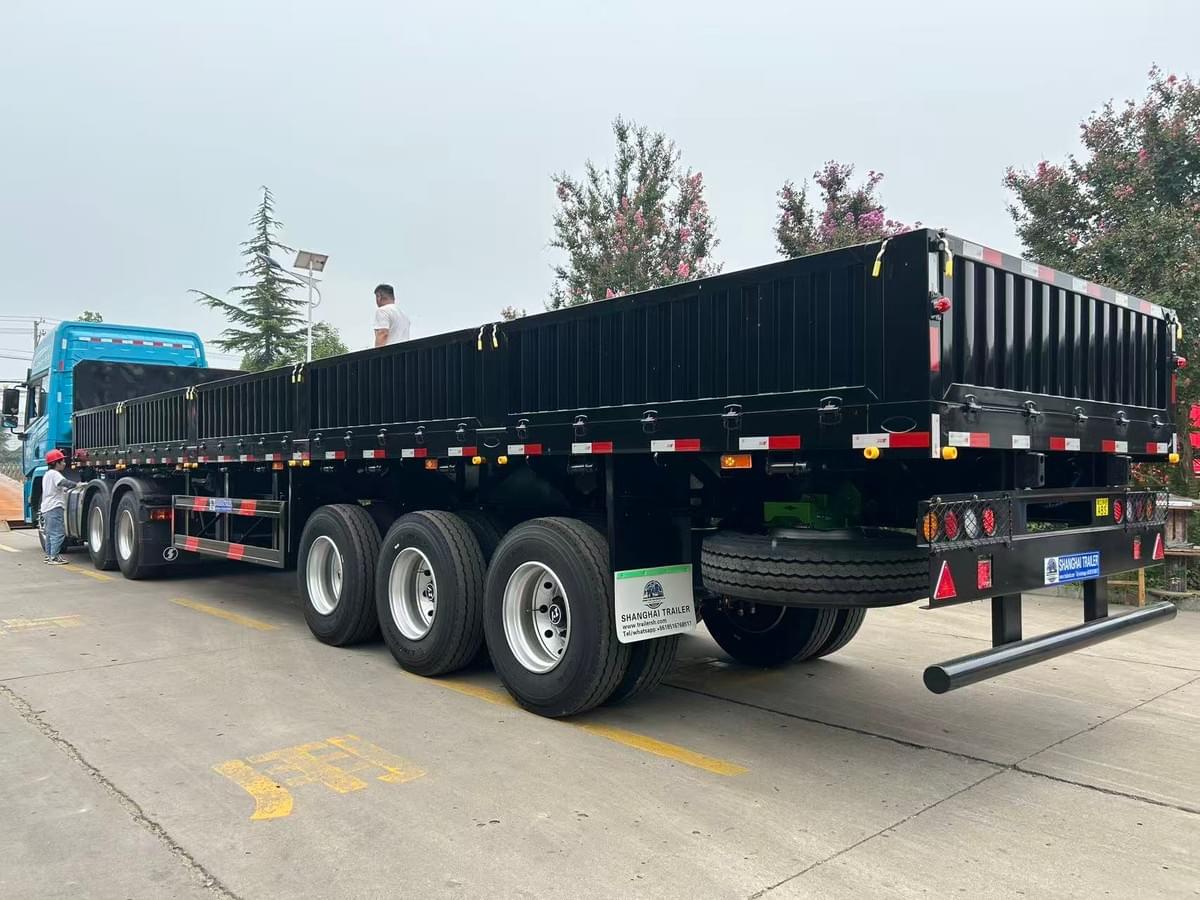
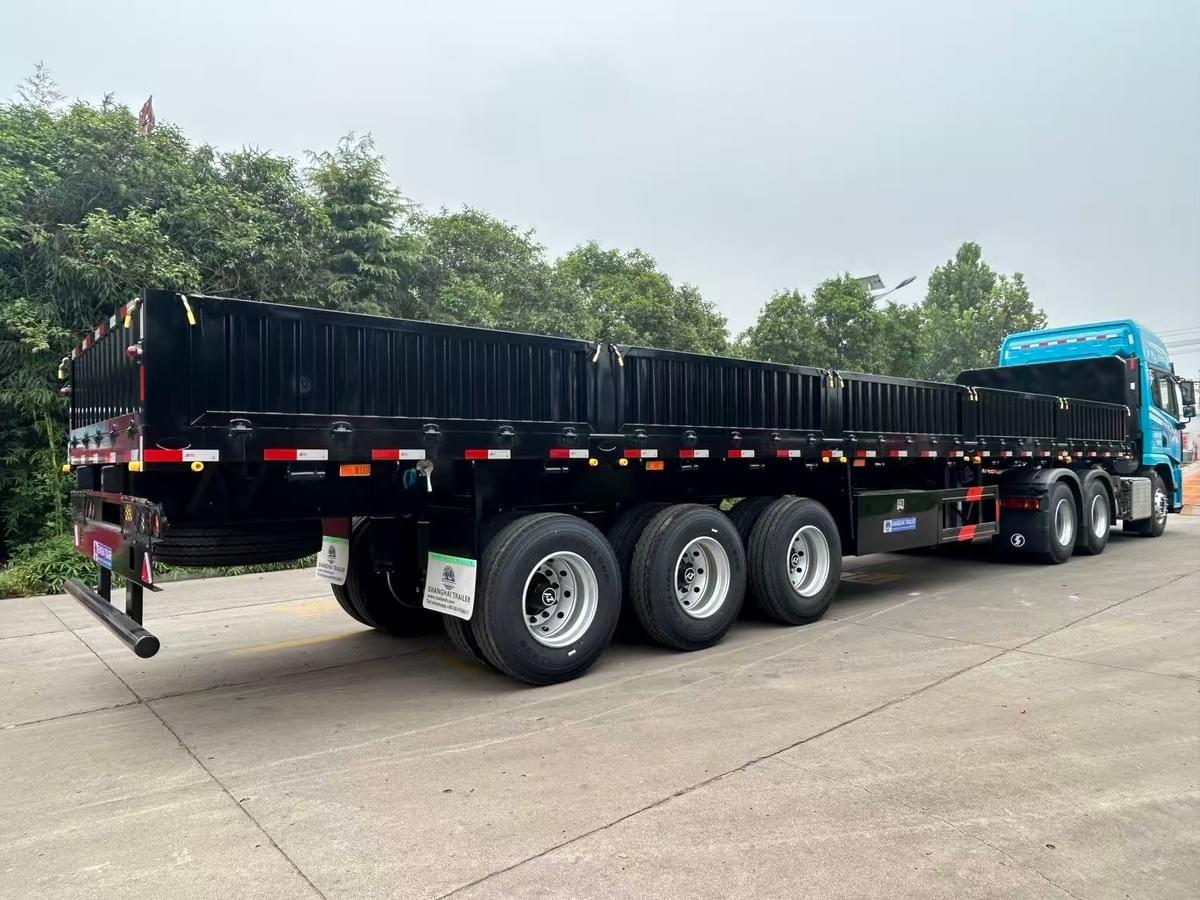
Drop-side semi-trailers are a common vehicle type in road freight transport; their use requires attention to both regulatory compliance and operational safety. Below is a systematic overview of key considerations:
I. Regulatory Compliance Requirements
1. Overall Dimensions and Side-Panel Height
In accordance with the national standard Limits of Dimensions, Axle Load and Mass for Motor Vehicles, Trailers and Combination Vehicles (GB 1589-2016):
- Side-Panel Height: The height of the trailer's cargo box side panels must not exceed 600 mm (separate regulations apply to dump-type vehicles).
- Vehicle Dimensions: Trailer body length ≤ 13 m; total length (including tractor unit) ≤ 17.5 m; width ≤ 2.55 m; total height after loading must not exceed 4 m.
- Cargo Height: For heavy-duty and medium-duty trucks and semi-trailers, the height of the loaded cargo measured from the ground must not exceed 4 m.
> ⚠️ Important Note: Do not arbitrarily raise the side panels or modify the vehicle structure (e.g., adding stake-side extensions); such actions constitute illegal modification and carry the risk of penalties.
2. Towing and Driving Qualifications
In accordance with the Regulations on the Implementation of the Road Traffic Safety Law:
- Towing Prohibition During Probation: Motor vehicle drivers must not drive a vehicle towing a trailer during their probationary period.
- Towing Quantity: Cargo trucks and semi-trailer tractors are permitted to tow only one trailer.
- Load Capacity Limit: The load capacity of the trailer must not exceed the load capacity of the towing vehicle itself.
- Equipment Requirements: Trailer components—such as lighting signals, braking systems, connection mechanisms, and safety guards—must comply with national standards.
3. Braking System Requirements
- Effective January 1, 2020, all wheels of drop-side semi-trailers must be equipped with disc brakes.
II. Pre-trip Inspection
Key Inspection Items
Braking System Check for normal air/hydraulic pressure; inspect for air or fluid leaks; monitor temperature of brake drums and wheel hubs.
Tires Check tire pressure and wear level; inspect for cracks or embedded foreign objects.
Lighting Signals Check functionality of turn signals, brake lights, clearance lights, and tail lights.
Side-Panel Locking Mechanism Ensure locking latches are secure; opening while driving is prohibited
Connection Devices Verify reliability of connections for the kingpin, fifth wheel, electrical wiring, and air lines.
Vehicle Structure Inspect side panels and floor for deformation or cracks; check integrity of welded joints.
III. Cargo Loading Standards
1. Weight and Distribution
- Strictly Prohibit Overloading: Cargo weight must not exceed the rated load capacity specified in the vehicle registration certificate.
- Even Distribution: Cargo should be distributed evenly within the cargo bed to prevent vehicle instability caused by unbalanced loads.
- Center of Gravity Control: Place heavy cargo at the bottom and light cargo at the top to prevent an excessively high center of gravity.
2. Dimensions and Securing
- Loading length and width must not extend beyond the cargo bed.
- Cargo must be effectively secured (using ropes, nets, tensioners, etc.) to prevent shifting or falling during transit.
- When side-board height is insufficient: Do not exceed the height limit by methods such as having personnel stand on the cargo; **no personnel are permitted to ride on the cargo** if the load height exceeds the vehicle's side boards.
IV. Safe Operation While Driving
1. Driving Habits
- Turning: Trailers have a large turning radius; slow down in advance, be mindful of the "inner-wheel difference" (off-tracking), and avoid scraping or collisions.
- Changing Lanes/Overtaking: Signal in advance, verify a safe distance, and avoid sudden steering movements.
- Following Distance: Maintain a distance of at least 100 meters from the vehicle ahead when traveling at speeds exceeding 100 km/h.
- Speed Control: The maximum speed limit on expressways is 100 km/h (for trucks and trailers).
2. Special Road and Weather Conditions
- Rain or Snow: Reduce speed and avoid sudden braking to prevent skidding or rollover.
- Downhill Sections: Strictly prohibited to turn off the engine or coast in neutral; use a low gear to control speed.
- Low Visibility: Turn on fog lights, low-beam headlights, clearance lights, and tail lights; drive within prescribed speed limits.
3. Fatigue Driving
- Continuous driving must not exceed 4 hours; the rest period must be at least 20 minutes.
V. Parking and Loading/Unloading
- Parking Site: Choose a flat, solid surface; engage the parking brake firmly; use wheel chocks if necessary.
- Loading/Unloading: Ensure the vehicle is fully stopped; watch for nearby personnel and obstacles when lowering or opening side boards; avoid colliding with pillars.
- Strictly prohibited to drive if vehicle doors or side boards are not properly secured.
VI. Purchase and Registration Reminders
- When purchasing, verify that the vehicle is included in the official MIIT (Ministry of Industry and Information Technology) announcement list to ensure it can be legally registered.
- Some models may bear labels stating they "do not comply with the regulations of the People's Republic of China... intended solely for export or for use in areas where vehicle registration is not required, such as internal off-road transport"; careful verification is advised.
Summary: The core safety principles for drop-side trailers can be summarized as follows: ensure compliance and avoid unauthorized modifications; conduct frequent pre-trip inspections; secure loads evenly and firmly; control vehicle speed; and rest to avoid fatigue. Strict adherence to these guidelines is essential to ensure transport safety and legal compliance in operations.